






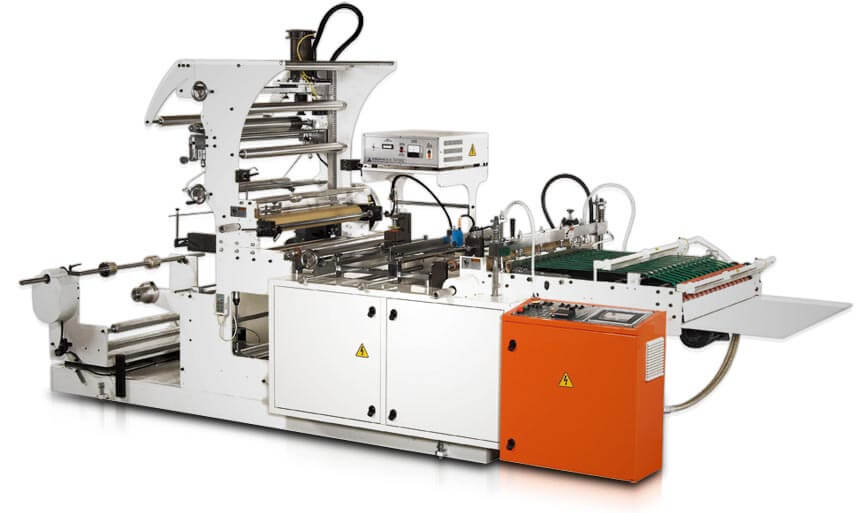
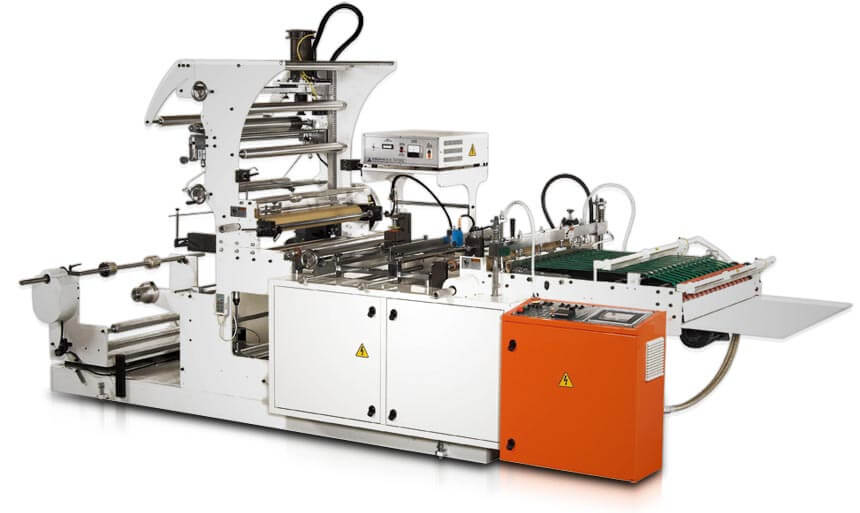
Side Sealing and Cutting Machine SDH-262S
-
Product features
- - High precision cutting control provided by servo motor.
- - Auto stop if material runs out.
- - High accuracy of pivot points tracing provided by high precision photocell sensor.
- - Auto stop if printing mark out of position.
- - Imported high speed conveyor belt & electronic parts for long service life.
- - Convenient to change for various bag shapes.
- - Ruggedly constructed for maximum stability during high speed.
Optional equipment- - Round hole punching device.
- - Butterfly (Euro hole) puncher.
- - Auto-conveyor table.
- - Edge positioning controller (EPC).
- - Heating line device.
- - Vertical continuous sealing device.
- - Bag dividing device.
- - Glue applicator.
- - Glue skip.
- - Ultrasonic longitudinal sealing device.
- - In line folding device.
- - Auto Hanger insert device.
Fully Automatic Plastic Biodegradable Bag Making Machine Prototype
S-DAI is a global biodegradable bag making machine manufacturer company in Taiwan, mainly providing customized polythene side sealing bag making machine for biodegradable bag, shopping bag, garbage bag, paper bag sleeve making that is suitable for such as corn starch raw materials to United States of America, especial in many industrial manufacturing cities in Michigan, Pennsylvania, Wisconsin, New York, Ohio, Illinois, Indiana, West Virginia, Kentucky and other emerging industrial cities in Puerto Rico, New Mexico, California, Texas, Arizona, Nevada, Florida, New Jersey, Colorado, Georgia, North Carolina, Virginia. In addition to the United States, we also provide customized biodegradable plastic bags making machinery to other countries such as India, Pakistan, Sri Lanka, Bangladesh, Russia, Poland, Hungary, Romania, Czech, Serbia, Germany, Netherlands, France, Spain, Italy, Spain, Portugal, Canada, Mexico, Brazil, Argentina, Peru, Chile, South Africa, Australia and the Middle East at a reasonable price.
Highly customized Biodegradable Bag Making Machine Line
In order to comply with the plastic restriction policies of various countries in terms of environmental protection regulations, we provide you with fully automatic biodegradable plastic bags making machine products manufacturing and after-sales service, which can meet the bag making needs of many non-plastic materials, such as common corn starch, calcium carbonate, etc. raw material. We are convinced that relying on the excellent and the best technical side sealing bag making machines manufacturing technology, that we can build a leading brand biodegradable bags manufacturing machine that could handle all types of environmentally friendly non-plastic materials. If you need more information about this bio production line machine model, please contact us by email or fill out the form on the contact page. We will contact you as soon as possible, or ask the dealer or supplier in your country to contact you. If you have needs for biodegradable or compostable plastic bag making machines, welcome to go to view the contact us page and fill out the inquiry form, or write to our official email to discuss more details about the specification and automation of bag making machine.
-
Model SDH-262S Available Material PP, OPP, CPP, LDPE, HDPE Width of Bag 20 - 200 mm Length of Bag Max.580 mm Speed pc minute
(Depends on material, bag type and size)Max. 250 Thickness Capacity
(Depends on material type)0.015~0.08 mm Heater 2 kW Motor 1.5 HP Power Required 5.5 kW Packing Dimensions
(L×W×H)250 × 145 × 205 cm Weight N.W.: 1280 kg
G.W.: 1480 kg
*Specifications are subject to change without notice.*The machine with servo system the model number will with (NC)
-
What is a Biodegradable Bag Making Machine?
A biodegradable bag making machine is a specialized industrial system and automated engineering equipment designed to convert eco-friendly, bio-based polymer resins—such as corn, cassava, or wheat starch, PLA, and PBAT blends—into fully compostable and biodegradable packaging products. These highly efficient, fully automatic production plants process raw granules into continuous films using high-speed extruder blowers or film blowing extruder technologies to make the material into rolls. Typically, these automated lines combine film extrusion, printing, side-sealing, and cutting mechanisms to manufacture custom retail packaging, such as vest, grocery, T-shirt, carry, carry-out, or shopping bags, as well as high-capacity garbage bags at high speeds. To achieve flawless flexible packaging conversion, these advanced systems typically operate by taking pre-extruded film rolls and performing automated tasks like edge folding, sealing, cutting, and handle punching. The machinery leverages servo-motor cutters, servo-driven motors, and intuitive PLC touchscreens to precisely regulate feeding, cut, and seal the substrates into final bag shapes. Offering versatile manufacturing capacities ranging from 100, 400, to 1,000+ pieces per minute, this integrated equipment balances sustainable material compatibility with dynamic automation, making it the definitive eco-friendly production line for modern commercial flexible bag fabrication.
How the Biodegradable Bag Making Machine Works?
The execution process of a biodegradable bag making machine is a highly synchronized, multi-stage engineering workflow designed to convert sensitive bio-polymers into flexible packaging without material degradation. The cycle begins with film blowing (extrusion), where raw compostable granules are blown into continuous tubular films. Managing this fragile substrate leverages core machine technologies, integrating multi-point dancer roller tension tuning during unwinding to prevent film deformation, paired with electronic line shafting synchronized feeding to ensure stress-free material transport across the web. The subsequent bag making (sealing & cutting) phase dictates the structural integrity of the final product. Because bio-based films are highly heat-sensitive, the system executes controlled low-temperature thermal welding via a continuous dwell-time optimization process to form unbreakable welds. Immediately following thermal fusion, in-line forced air cooling stabilization rapidly sets the joints to eliminate film sticking. For mechanical separation, high-precision cutters utilize a dynamic thermal shrinkage compensation algorithm to constantly calibrate cut lengths against material contraction. Finally, the punching & stacking phase automates logistical delivery. Heavy-duty mechanical components precisely stamp out handles for T-shirt configurations, while automated arms collect, count, and stack the finished bags onto a high-velocity conveyor system for immediate packing. With over 25 years of experience in the design and manufacturing of plastic biodegradable bag making machines, S-DAI Industrial will introduce you to the following 3 important workflows of a biodegradable bag making machine:
Blown Film Extrusion
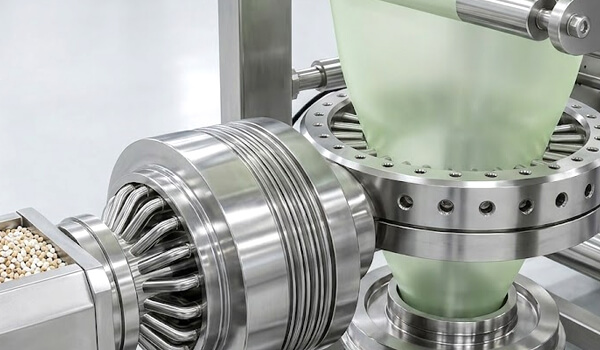
Film blowing is the foundational engineering phase that dictates the gauge uniformity and material stability of the entire conversion line. The process melts raw biopolymer granules, cornstarch, PLA, or PBAT resin pellets within a heated extruder barrel, forcing the molten matrix through a specialized die head. An air ring blows this melt into a continuous tubular film bubble, which is cooled and wound into film rolls. Mastering this extrusion phase is critical for a biodegradable bag making machine because bio-resins possess narrow thermal windows and low extensional melt strength. Precision automated controls over film gauge thickness are vital to prevent downstream web snapping, wrinkles, and structural failures during high-speed sealing and cutting workflows.
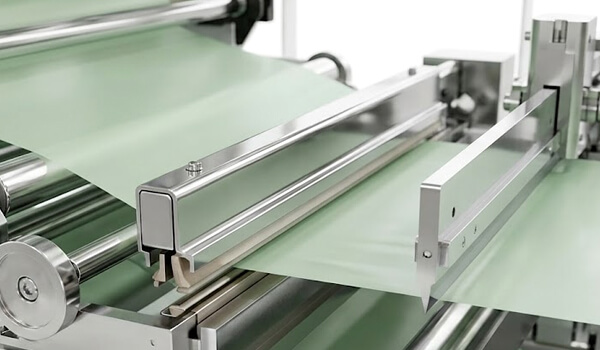
Bag Making (Sealing & Cutting)
Bag making is the critical mechanical conversion phase that dictates the absolute burst strength and dimensional tolerance of the bioplastic packaging. The machinery unit automatically unwinds the polymer film rolls, executing continuous feeding, gusseting, printing, and edge folding. Hot blades or heat-sealing bars then securely bond the bottom joints before high-speed mechanical cutters slice the substrates into specific shapes like flat, W-cut, U-cut, or D-cut vest bags. This process is paramount for a biodegradable bag making machine because eco-friendly films exhibit low tensile strength and extreme heat sensitivity; precise automated control over thermal welding parameters is vital to prevent molten polymer distortion while ensuring structural weld integrity.
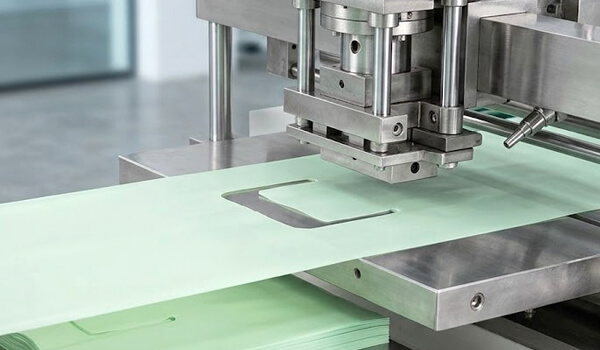
Punching Stacking
Punching and stacking is the definitive automation phase that governs the final presentation, retail-ready aesthetics, and logistics collection of the production line. Automated die-cutting components precisely stamp out handle styles like U-cut, W-cut vest, or D-cut configurations, while integrated counting mechanisms sort and align the finished products for delivery. This stage is extremely vital for a biodegradable bag making machine because bio-polymer films lack rigid material memory and are highly prone to static buildup and stretching. Advanced mechanical punching combined with neat stacking minimizes material scrap and prevents bag friction or deformation, which is paramount for ensuring seamless, continuous downstream packaging.
What are the Key Technical Specifications of the Biodegradable Bag Making Machine?
The key technical specifications of a biodegradable bag making machine are the defining engineering parameters that govern high-precision biopolymer conversion. For materials processed, the system relies on an ultra-low tension control integration network to handle fragile PLA, PBAT, and starch-based films without causing substrate distortion. The automation level is driven by a multi-stage servo-driven active feeding architecture, which minimizes mechanical stress and coordinates web velocity to optimize output capacity up to 800 pieces per minute. To maintain exact bag dimensions across fluctuating thermal zones, the machine implements a bio-polymer film shrinkage compensation algorithm that dynamically adjusts cutting tolerances during high-velocity cycles. For versatile bag types like T-shirt, shopping, and commercial garbage sacks, the unit utilizes a low-temperature precision sealing technology configured with anti-sticking teflon-coated sealing bars to eliminate polymer adhesion and tearing. Finally, balanced power requirements are maintained through advanced controllers executing extended elongated heating & cooling cycles, allowing the system to achieve high-integrity molecular bonding while maximizing energy efficiency across the continuous production line. With over 25 years of experience in the design and manufacturing of biodegradable bag making machines, S-DAI Industrial will explain the following 6 key technical specifications of the biodegradable bag making machine:
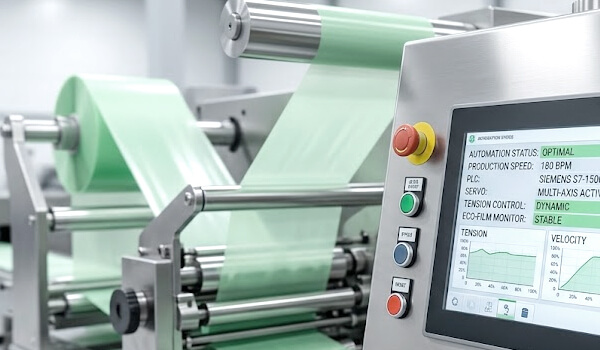
Automation Level
Automation level is the definitive operational metric that governs the manufacturing velocity, labor efficiency, and repeating precision of the entire production plant. Fully automatic systems integrate high-performance PLC control systems, touchscreens, and multi-axis servo motors to execute high-speed, continuous workflows with minimal human intervention. This aspect is paramount for a biodegradable bag making machine because eco-friendly films possess highly unstable physical properties and narrow processing windows; smart automated sensors are critical to perform instant tension micro-adjustments and trigger automatic stops during material depletion or print mark misalignment, eliminating scrap.
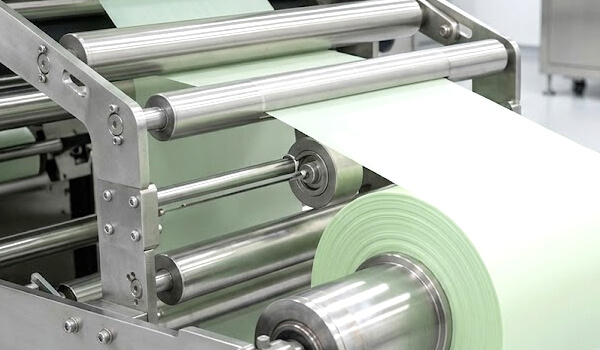
Materials Processed
Materials processed is the core compatibility parameter that defines the structural limits, chemical baseline, and thermal configuration of the equipment. The system handles specialized compostable polymer films—typically between 8μm to 200μm in thickness—derived from PLA, PBAT, cornstarch, cassava, or natural starch compounds. This dimension is paramount for a biodegradable bag making machine because bio-resins respond to tension and heat differently than traditional polyolefins. Specialized machinery must deploy precise, servo-controlled tension and temperature calibrations to eliminate the critical risk of the bioplastic substrate tearing or stretching out of place during continuous film conversion.
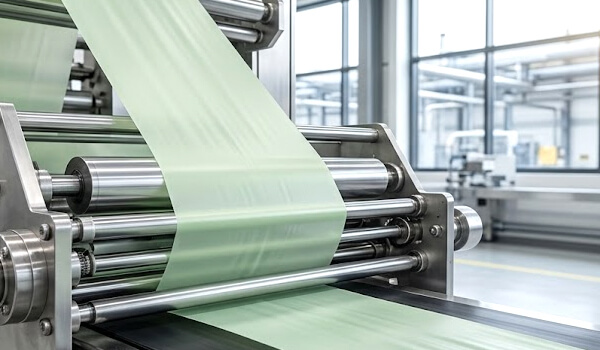
Output Capacity
Output capacity is the critical performance metric that dictates the manufacturing output velocity, commercial scalability, and return on investment for the machinery conversion line. Production speeds vary heavily by model, ranging from semi-automatic baselines yielding 30–45 kg/hour to high-speed commercial production lines running up to 150 meters per minute, delivering 40 to 800 bags per minute. This specification is paramount for a biodegradable bag making machine because bio-resins are highly heat-sensitive; maintaining stable web high-speed single or twin-channel lane conversion configurations requires precise thermal sealing synchronization to prevent polymer material failure while maximizing volume.
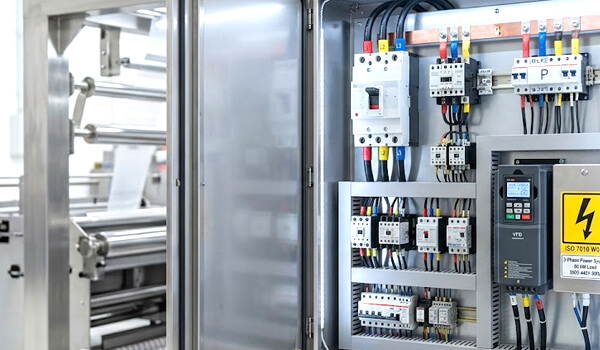
Power Requirements
Electrical power requirements is the foundational utility parameter that governs the thermal distribution, energy efficiency, and operational stability of the system. The machinery generally mandates a 380V–440V three-phase industrial power supply, with connected electrical loads ranging from 15 kW to 55 kW depending on the heating capacity, extrusion scale, and total manufacturing output. Managing this electrical infrastructure is paramount for a biodegradable bag making machine because biopolymers require extremely uniform, steady power delivery to prevent sudden temperature fluctuations on the sealing bars and heated extruder barrel, which would otherwise result in catastrophic material burning or weak seal joints.
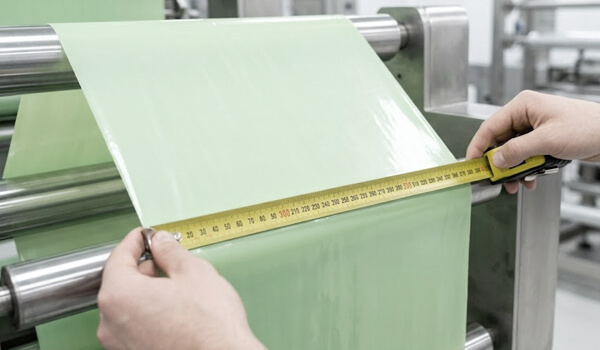
Bag Dimensional
Bag dimensions is the critical spatial parameter that determines the product versatility, market scalability, and geometric accuracy of the flexible biopolymer packaging output. Depending on the specific machinery equipment configuration, bag widths commonly range from 70 mm to 900 mm, while lengths vary widely from 150 mm to 1500 mm. Maintaining precise control over these mechanical dimensions is paramount for a biodegradable bag making machine because thermoplastic bio-resins experience high material shrinkage and unstable neck-in properties during conversion; integrating precise multi-axis servo coordination is vital to ensure absolute dimensional accuracy and zero deviation under high-velocity continuous slitting cutting.
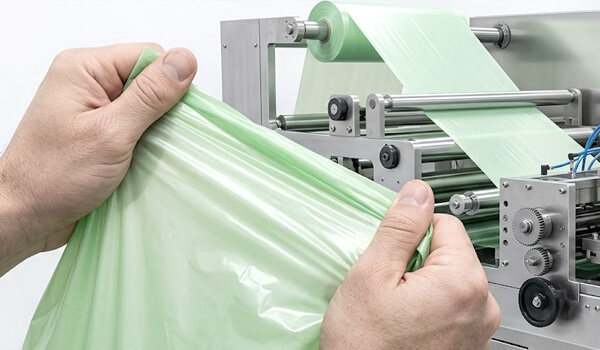
Bag Types
Bag types is the foundational adaptability index that defines the application versatility and commercial market scope of the production plant. The system can be configured to manufacture flat grocery sacks, die-cut or loop handle shopping bags, high-speed twin-channel vest-style T-shirt bags at 800+ pieces per minute, and garbage liners on rolls with star-seal, square, V-shape, or W-cut bottom reinforcements. This versatility is paramount for a biodegradable bag making machine because eco-films possess varied elastic memory and sealing dwell-time constraints; the machinery must deploy modular customization to ensure flawless seal integrity across all bag configurations without compromising structural burst strength.