





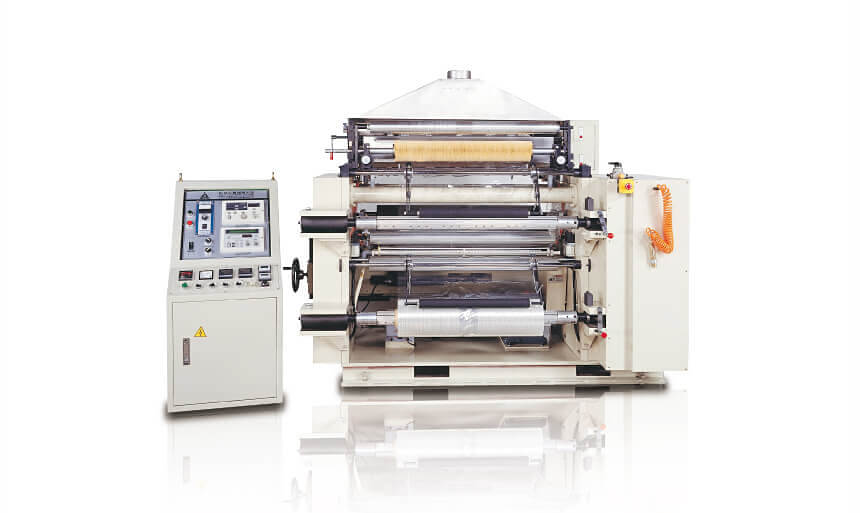
Slitting & Perforation Machine SD-1600 SLP
-
Product features
Slitting device features:- - Progressive with 5HP AC motor drivefor variable speeds.
- - Smooth feeding provided by advanced edge position controller (EPC) on the unwinder.
- - Powder brake on unwinder could ensure the accurate tension control on applicable poly films.
- - Powder clutch on rewinder could ensure the accurate tension control on applicable poly films.
- - Micrometric offset automatical tension controller on the unwinder and rewinder.
- - Equipped polythene stretch film slitter with counter.
- - Convenient and fast product unloading provided by air shaft on the rewinding device.
- - Convenient and fast material loading provided by air operated shaftless unwinder.
- - Waste material blower for efficient collection.
- - Easy to operate, save more manpower, customized plastic slitting machine basic model.
- - Equipped with an electrostatic removing tool to eliminate electrostatic mistake issue.
- - Equipped with the auto-stop capability with the ultrasonic sensor equipment when material blanking.
- - Advanced ploythene film micro perforation machine equipped with Germany made hot pin.
Available material- - BOPP, PP, HDPE, LDPE, CPP and single layer film.
Optional equipment- - LPC.
- - Paper core cutting machinery.
- - Special hot pin roller (size & distance & type).
Customized Prototype of Plastic Film Slitting Machine with Perforation
S-Dai is one of the famous paper or plastic converting machine manufacturers in Taiwan bag making machinery industry, providing customized film slitter and rewind roll device with rewinding machine products for BOPP, PP, CPP, HDPE, LDPE slitting and rewinding and perforation process of the poly bag production line system to United States(USA), Poland, Romania, Mexico, Colombia, Argentina, Ecuador, Dominican Republic, Chile, Guatemala, El Salvador, Peru, Kenya, Nigeria at an reasonable price. S-DAI is one of the plastic slitting machine manufacturers in Taiwan, specializing in providing customized manufacturing services to clients who need a machine with many functions such as slitting, rewinding and perforation at the same time. This SD-1600 SLP machinery can be highly customized on many main devices such as hot pin perforation and foil blades slitter, and it can punch and slit on a variety of plastic materials for various specifications of automatic side sealing machine, bottom sealing machine and zipper bag making machine. Based on more than 45 years of automatic high speed plastic bag making machine manufacturing experience, we can manufacture high quality perforation puncher, stretch rewinders and slitter device products that can shrink in suitable strength on the machine according to the different slitting needs of the client. It is particularly worth mentioning that our film slitting machine is equipped with an high-end designed cutter device, is suitable for various plastic raw materials made tape cutting.
Over 45 Years Experience on Plastic Bag Converting & Auxiliary Equipment
Based on more than 45 years of experience in manufacturing plastic bag converting and auxiliary equipment, we have complete plastic bag plant equipment planning and manufacturing capabilities. Considering the side sealing machine, folding, packaging, and winding machines that may work together, we insist on manufacturing each machine in a customized way. S-DAI is a global polythene pouch bag making machine manufacturer, mainly providing quality customized plastic bag machine manufacturing service to United States of America, especial in many industrial manufacturing cities in Michigan, Pennsylvania, Wisconsin, New York, Ohio, Illinois, Indiana, West Virginia, Kentucky and other emerging industrial cities in Puerto Rico, New Mexico, California, Texas, Arizona, Nevada, Florida, New Jersey, Colorado, Georgia, North Carolina, Virginia. In addition to the United States, we also provide customized bag making machine and related auxiliary products to other countries such as Canada, Germany, France, Italy, Spain, Portugal, Algeria, Eygpt, South Africa, Saudi Arabia, United Arab Emirates, Turkey, India, Thialand and Vietnam. If you have any customized needs about our automatic slitting machinery with perofration function products, welcome to contact us by email, we will prepare the information you need and reply to you as soon as possible.
-
Model SDH-1600SLP Film Slitting Speed 120 M/Min Film Perforation Speed 60 M/Min Product Width 150 - 1600 mm Shaft Width 1300 mm Material Diameter 600 mm (Max.) Porduct Diameter 420 mm (Max.) Rewinder Core Diameter 3" ø Machine Dimensions (L × W × H) 3.14 × 1.95 × 1.94 m Packing Dimensions (L × W × H) 3.34 × 2.15 × 2.14 m Net Weight 2600 kg Gross Weight 3200 kg -
What is a Film Slitting Machine?
A film slitting machine (or slitter rewinder) is industrial equipment that converts large, wide "parent," "master," or "jumbo rolls" of flexible material—like plastic, metalized, laminated, or optical film, paper, laminate, or metal foil—into narrower, precise widths, rewinding them into smaller finished rolls or individual narrow strips onto separate cores. It is a critical component and a key tool in the flexible packaging, electronics, labels, labeling, thermal film production, printing, and converting industries, ensuring uniform width and clean edges while maintaining tight tension control to make films ready for manufacturing. This automated equipment operates through three or five continuous main stages: unwinding the parent material from an unwind stand, running it through web guiding and a blade zone for precise width cutting, and rewinding the slit strips. Specifically, it unwinds a giant roll, slices the material longitudinally by utilizing razor, circular shear, or rotary blades, and automatically rewinds the strips onto new, individual cores using a rewinder. It processes materials like BOPP, PET, CPP, and PVC by utilizing an integrated precise tension control system to ensure structural integrity across all finished products. A plastic film slitting machine is a high-precision web conversion equipment engineered to slice parent master rolls into narrower customized widths. To maintain structural roll integrity under high-velocity operations, advanced slitting machinery integrates closed-loop load cell tension control and differential air shafts to neutralize film gauge variations, while deploying specialized razor-in-groove slitting configurations to ensure pristine, burr-free edge quality without thermal distortion.
How the Film Slitting Machine Works?
The mechanical workflow is the synchronized kinematic progression that governs the conversion precision, edge alignment, and structural roll density of the system. Operation initiates at the unwind stand where heavy master rolls are loaded, utilizing automated web guiding sensors to guarantee flawless edge rectification before the substrate passes through closed-loop tension control systems, where load cells and brakes function as key components to neutralize film stretching. Next, the web enters the slitting zone, deploying specialized razor or circular shear blades as the key types of cutting tools to execute longitudinal separation, immediately leading to the rewind section where slit strips are wound onto differential shafts while integrated static elimination bars neutralize residual surface charges to prevent cling. This seamless multi-stage execution is paramount for continuous web conversion because flexible polymer films possess high elastic deformation and varying friction coefficients; managing these specific stages within a single automated line eliminates web tracking errors, ensuring impeccable roll profiles. With over 30 years of experience in the design and manufacturing of plastic film slitting machines, S-DAI Industrial will introduce you to the following 6 important workflows of a plastic film slitting machine:
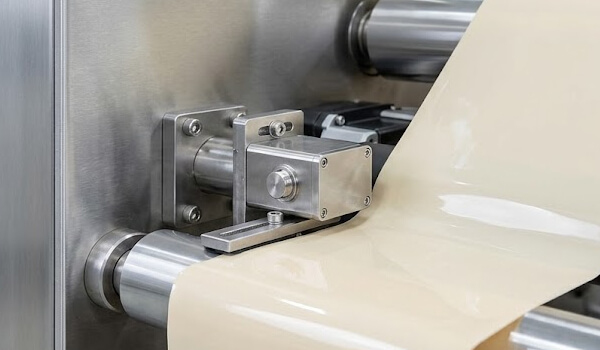
Unwind Unit
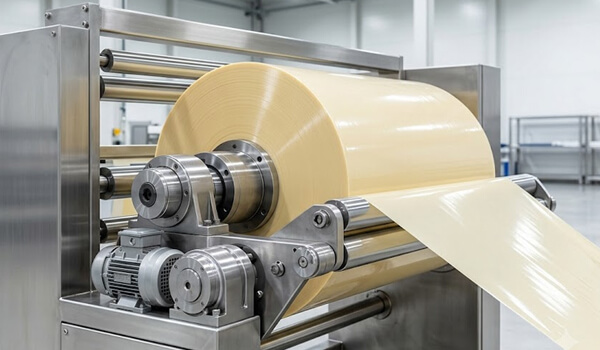
Unwind mechanism is the initial web-handling phase that establishes the material baseline, tracking stability, and raw feed rate for the entire slitting line. The system securely mounts heavy master parent rolls—frequently ranging from 1000mm to 3000mm wide—utilizing shaftless or hydraulic stands to uncoil the substrate effortlessly into a continuous continuous sheet. This stage is paramount for a film slitting machine because any initial feeding distortion propagates downstream; integrating precise magnetic powder brakes or driven motors is critical to maintain steady tension profiles, completely preventing thin plastic films from tearing, wrinkling, or breaking.
Web Guiding
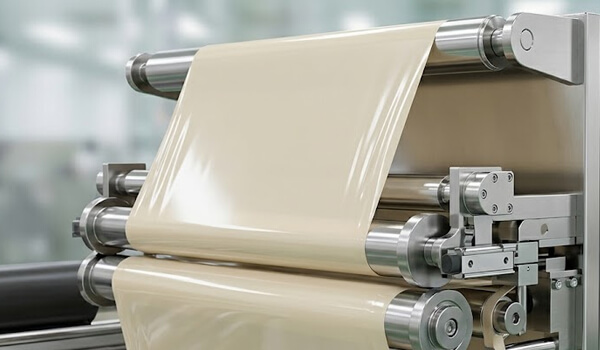
Web guiding is the automated lateral alignment process that dictates the geometric tracking accuracy and final roll edge profile during high-speed continuous conversion. The system deploys specialized ultrasonic EPC sensors—functioning as high-precision photoelectric electric eyes—to automatically keep the moving film centered and feeding perfectly straight. This mechanism is paramount for a plastic film slitting machine because flexible substrates are prone to shifting or stretching; utilizing closed-loop real-time edge rectification eliminates structural tracking errors, completely avoiding telescoping, overlapping, or uneven finished edges during rewinding.
Tension Control
Tension regulation is the critical dynamic balancing mechanism that dictates the physical substrate integrity, dimensional stability, and winding tightness of the entire web. The system utilizes advanced closed-loop PLC logic combined with magnetic powder brakes, magnetic clutches, or multi-axis servo drives to maintain constant, precise inter-layer web tension during high-speed operation. This parameter is paramount for a plastic film slitting machine because thin plastic films have low elastic thresholds; real-time automatic micro-adjustments prevent the moving film from stretching, wrinkling, deforming, or snapping under heavy mechanical pull.
Slitting Station
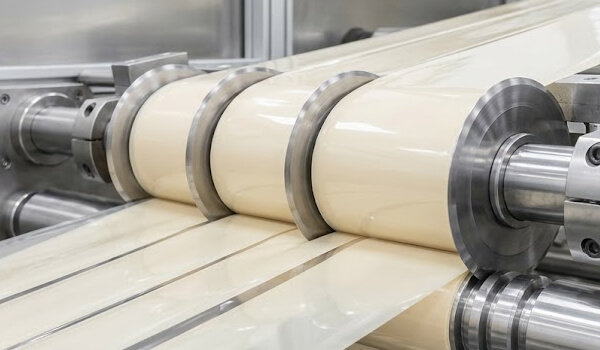
Slitting section is the core mechanical separation phase that dictates the absolute dimensional width precision and pristine edge quality of the processed substrates. The web passes through a heavy-duty blade station deploying specialized flat razor blades for thin films, spinning circular rotary knives or shear blades acting like scissors for thicker foils or multi-layer laminates, or crush score cutters to slice the material into exact preset sizes. This station is paramount for a film slitting machine because micro-vibrations or wrong knife selection cause severe thermal distortion and burrs; deploying precise blade geometries ensures clean, high-velocity longitudinal cutting.
Rewind Section
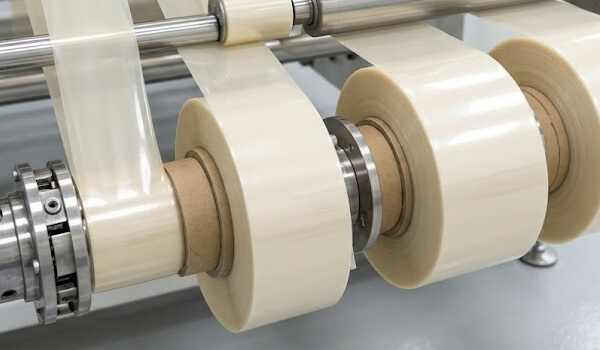
Rewind mechanism is the final mechanical collection phase that dictates the ultimate roll profile, structural tightness, and winding density of the processed substrates. The newly cut, sliced strips are wrapped and recoiled onto separate cardboard, plastic, or individual cores on smaller shafts. This section is paramount for a plastic film slitting machine because handling varying film thicknesses and roll weights requires specialized dynamic roll-building technology; deploying advanced turret-style, differential, center, or surface winding configurations eliminates interleaved layers and telescoping, delivering flawless, tightly wound cylindrical finished rolls of various sizes.
Static Elimination
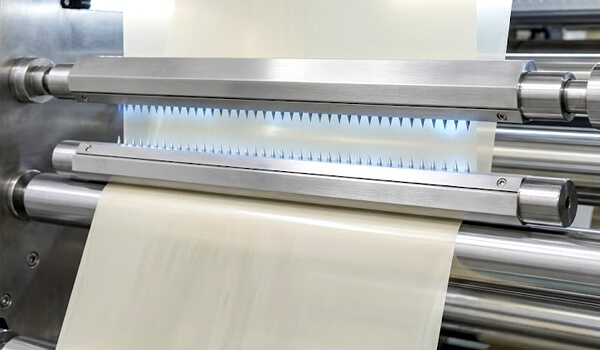
Static elimination is the critical surface-conditioning phase that dictates the electrostatic safety, dust prevention, and layer separation of automated high-speed web handling. The system deploys specialized ionizing anti-static bars to neutralize triboelectric electrical buildup generated by continuous friction on polymeric plastic films. This process is paramount for a plastic film slitting machine because high-velocity converting generates intense electrostatic charges; discharging this surface tension completely prevents slit rolls from clinging to themselves, interlocking during discharge, or attracting airborne particles, guaranteeing immaculate, market-ready finished rolls.
What are the Key Technical Specifications of the Film Slitting Machine?
Technical evaluation is the benchmark methodology that governs the production capacity, dimensional tolerance, and automation intelligence of the system. High performance mandates a rapid Operating Speed that commonly scales up to 150–500 meters per minute to maximize manufacturing volume. Simultaneously, maintaining a rigorous Slitting Accuracy within a zero-deviation threshold (typically less than or equal to 0.1 mm) is paramount to eliminate burrs and uneven edges on thin polymers. To sustain this precision across high-velocity continuous conversion, the integration of an intelligent Automatic Positioning system is vital; utilizing automated knife alignment and laser core positioning sensors reduces manual setup friction, completely avoiding edge weaving while delivering flawless finished rolls. With over 30 years of experience in the design and manufacturing of plastic film slitting machines, S-DAI Industrial will explain the following 3 key technical specifications of the biodegradable bag making machine:
Operating Speed
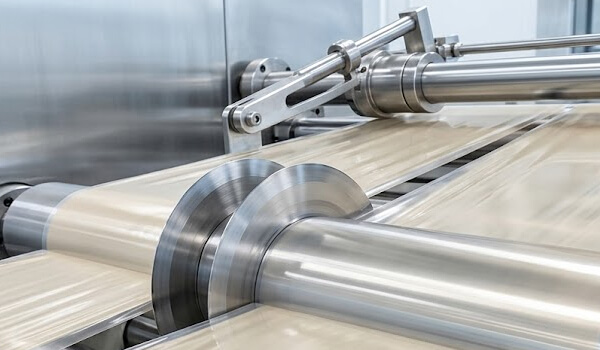
Operating speed is the definitive throughput metric that governs the kinetic velocity, commercial scalability, and hourly output volume of the conversion line. High-performance units easily sustain processing rates ranging from 150 m/min for specialized short-run jobs up to a rapid 600+ meters per minute to meet heavy industrial demands. This specification is paramount for a plastic film slitting machine because maximizing high-speed mechanical output without inducing thermal blade friction, web snapping, or edge weaving is the ultimate benchmark of structural stability and advanced multi-axis servo synchronization.
Slitting Precision
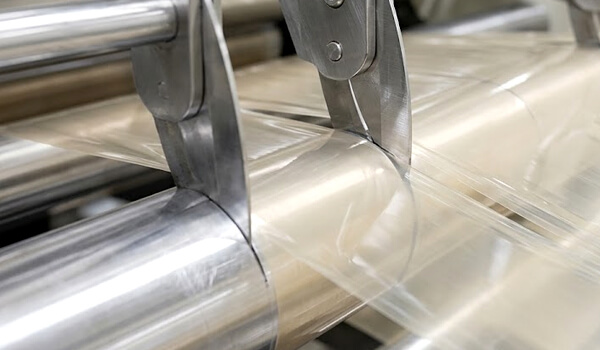
Slitting tolerance is the foundational quality parameter that dictates the absolute width consistency, edge straightness, and micro-metric variance of processed ribbons. Advanced conversion machinery allows flexible configurations that adjust down to narrow bands with a 10mm minimum width while strictly holding a tight accuracy of within plus or minus 0.2 mm. This dimension is paramount for a plastic film slitting machine because high-velocity precision cutting eliminates edge burrs and material stretching under high tension, preventing downstream packaging failures and ensuring pristine roll alignment.
Automated Systems
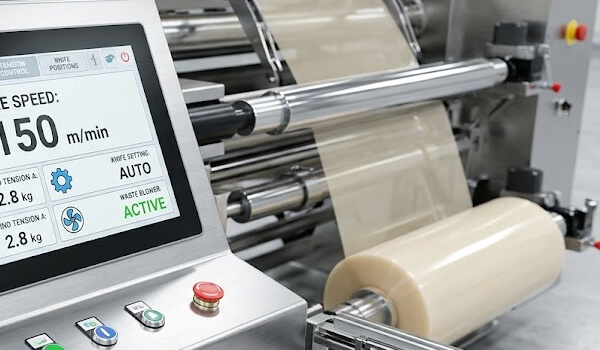
Automation architecture is the centralized intelligence network that governs the operational efficiency, job-changeover speed, and systemic safety of the equipment. Advanced units integrate PLC touchscreens with automatic positioning computers to adjust blades instantly when changing sizes, while specialized waste blowers vacuum up loose trim or scrap film automatically. This integration is paramount for a film slitting machine because high-velocity processing demands precise automatic tension control and electrostatic removing tools; eliminating manual calibration prevents substrate damage, ensuring impeccable quality.
What are the Primary Applications of Film Slitting machine?
Industrial utilization is the core commercial driver that dictates the mechanical configurations, winding precision, and slitting methodologies of the equipment. High-performance lines process Packaging Films like BOPP, PET, and PE, converting master rolls into narrow substrates ready for flexible wrappers and plastic bag making machine operations. Simultaneously, the system handles heavy-duty Adhesive Tapes, requiring specialized blade geometries to slice tacky coatings cleanly without adhesive buildup. Furthermore, the technology is critical for processing high-precision Optical Films used in electronic displays; maintaining extreme cleanliness and tension regulation ensures scratch-free, dustless separation across all layers, satisfying rigid commercial standards. With over 30 years of experience in the design and manufacturing of plastic film slitting machines, S-DAI Industrial will explain the following 3 primary applications of the plastic film slitting machines:
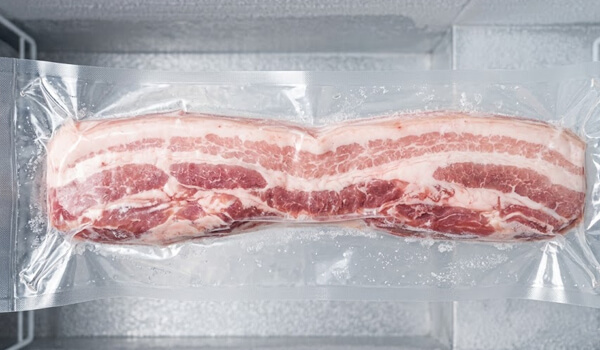
Flexible Packaging
Packaging film conversion is the critical mechanical phase that dictates the barrier integrity, roll conformity, and exact precise widths of substrates required for modern distribution. The automated machine slits diverse materials—including BOPP, PET, PE, and multilayer CPP films—converting wide master rolls into pristine, narrow bands engineered for food bags, medical supplies, consumer goods packaging, and retail wrappers. This process is paramount for a plastic film slitting machine because downstream high-speed wrapping and plastic bag-making equipment demand perfect micrometric dimensional tolerance; delivering burr-free edges and precision controlled tension ensures these flexible plastics form hermetic, defect-free seals that protect sensitive products from contamination, moisture vapor, and premature structural failure.
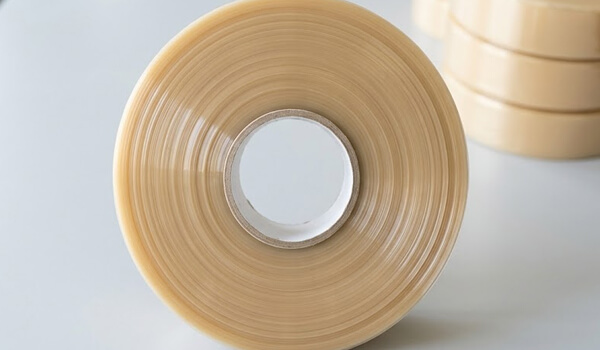
Adhesive Tapes
Adhesive tape slitting is the high-precision mechanical dividing phase that dictates the edge quality, uncoiling stability, and multi-layer structural conformity of pressure-sensitive coated webs. The machinery processes specialized substrates—such as metalized films, window films, masking, or clear tapes—slicing massive industrial parent rolls into precise, smaller consumer sizes and narrower widths tailored for demanding industrial and automotive uses. This role is paramount for a plastic film slitting machine because sticky adhesive coatings create immense blade drag and friction; deploying advanced non-stick blade geometries and specialized tension-controlled web-handling layouts prevents adhesive buildup and edge bleeding, delivering clean, warp-free rolls that apply flawlessly to vehicle panels and complex assembly lines.
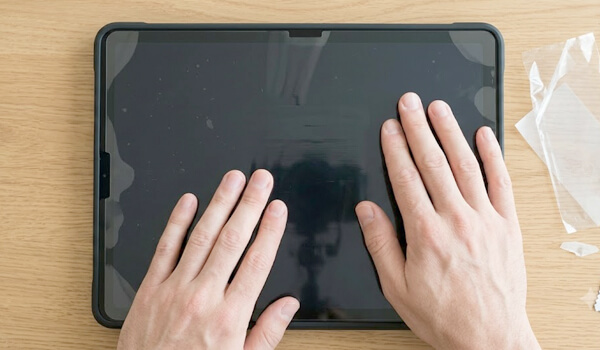
Optical Displays
Optical film conversion is the ultra-precision micro-slitting phase that dictates the light transmission integrity, layered alignment, and defect-free surface quality of advanced electronic substrates. The machine processes highly specialized optical films and multi-layer composite packaging materials, preparing these delicate webs for integrated TV screens, smartphone phone displays, and industrial monitors. This specialized role is paramount for a film slitting machine because optical components are highly sensitive to microscopic debris and physical scratching; deploying advanced non-contact web-handling systems and cleanroom-grade circular shear blades ensures dustless, scratch-free edge separation, rendering the slit sheets perfectly suited for high-definition display assembly without causing optical distortion or polarization failure.