



Side Sealing Machine Wicketer SDH-322SW

-
Product features
- - Fully automatic designed, one operator can take care of two machines.
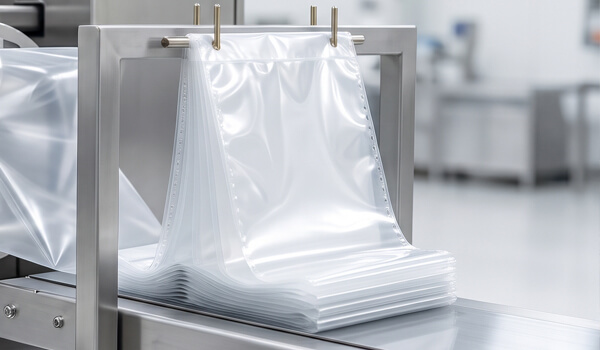
- - Out feed with auto-conveyor collection system.
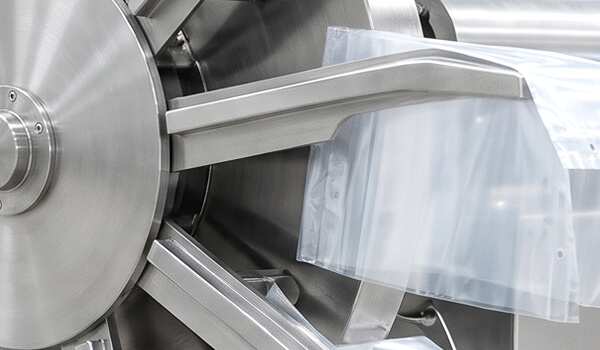
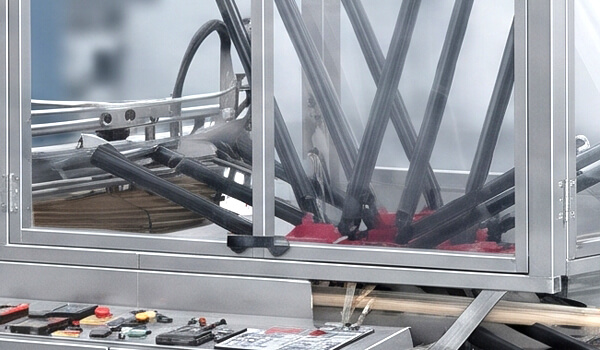
- - Bag collection is by 6 rotary arms with vacuum system.
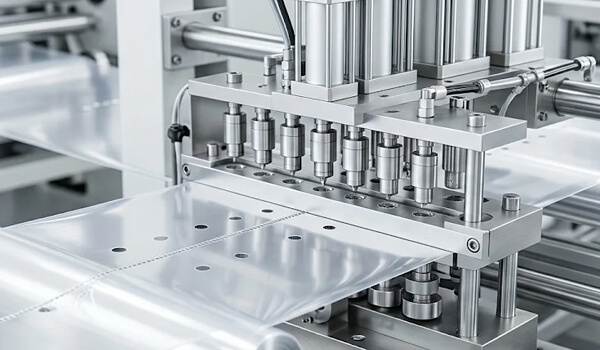
- - Two punch sets for easy hole collection, and vertical punch for extra clean hole.
- - Can be adapted to a variety of applications.
Optional equipment- - Chicken bag device.
- - Courier bag device.
- - In-line folding device for cuntomized bags and single layers.
- - Baby diaper bag device.
- - For special type design available.
Customized Wicket Bag Making Machine
S-DAI is a global plastic bag machinery manufacturer company in Taiwan, providing customized and high speed plastic wicketer bag making machine production line for plastic wicketed bag, saddle bag, deli bag manufacturing, and other related side seal bag machinery products with precision control by servo motor to Poland, Belarus, Ukraine, Hungary, Romania, Serbia, Bulgaria, Germany, Italy, France, Spain, Portugal, Russia, US, Mexico, Peru, Argentina, Egypt, Algeria, Kenya, Nigeria, South Africa, Japan, Saudi Arabia, Thialand, Vietnam, Malaysia, Indonesia at a reasonable price. Based on more than 30 years of manufacturing experience in bag on roll and plastic bread packaging bag, we can manufacture highly customized and labor-saving plastic bag production line for you. In recent years, we have actively explored the plastic wicketer machine, side sealing pouch machinery with wicketer device and related poly handle bag machinery market in Europe, US, America, Central and South America, the Middle East, Southeast Asia and other regional countries, providing high speed and high quality customized poly wicketer bag making machines and comprehensive after-sales services. S-DAI is your best partner for varoius types pf automatic high speed plastic bag making machine production line with wicketer device manufacturing.
Automated Wicketed Bag Converting Systems for High-Speed Production
High-volume wicketed bag production requires precision engineering to deliver consistent speed and operational efficiency across demanding packaging environments. S-DAI Industrial stands as a leading manufacturer in the flexible polymer converting industry, engineering high-speed wicket pouch fabrication platforms designed for continuous industrial output. Each automated converting unit is equipped with a high-accuracy photocell sensor to track printed film registration, a heavy-duty sealing knife for structural seam integrity, and an organized collecting table that neatly stacks finished pouches onto wicket pins. Driven by a central servo drive system, our machinery reduces cycle time while maintaining stable processing quality at maximum operational power.
Customizable Technical Specifications and Precision Polymer Processing
Flexible pouch fabrication requires versatile web handling to accommodate diverse pouch dimensions, film gauges, and customer requirements. Our systems process a wide range of synthetic films to yield specialized products with variable bag width configurations, bottom gusset options, and reinforced square seal profiles. To optimize line throughput for every case, plant operators can monitor key operational details, measure total output per min, and adjust web tension parameters through an intuitive touchscreen interface. We specialize exclusively in processing flexible polymer resins and do not manufacture converting equipment for paper, textiles, or non-plastic materials.
Global Technical Support and Direct Engineering Inquiries
Selecting the ideal converting system involves balancing production capacity with long-term operational reliability. S-DAI Industrial provides comprehensive technical support and long-term maintenance service to ensure your production lines maintain peak performance throughout their service life. Prospective buyers can explore full technical description sheets, view dynamic operational videos, or send a message directly to our engineering team to request customized machinery layouts. Contact us today to receive a free technical consultation, learn more about our new generation of polymer pouch machinery, or get in touch with a customer representative to request a formal quotation.
-
Model SDH-322SW(NC) Width of Bag 200 ~ 400mm Max. Length of Bag 600mm Max. Speed (depend on material, thickness, bag size) 250 PCS / Min Max. Thickness 0.015 ~ 0.08 mm -

What is a Wicket Bag Making Machine?
A wicket bag making machine, also known as a wicketer, is a highly specialized, automated high-speed side-seal and side-weld industrial converting machine or system engineered to manufacture pre-opened wicketed plastic or biodegradable bags that are uniformly and neatly stacked, collected, and held together on a U-shaped metal or plastic wire rod, pin, pins, bracket, or brackets called a wicket or wickets. Unlike standard bag-making machines that simply drop finished bags onto a conveyor belt or traditional stacking tables, a specialized wicketer uses a series of rotating vacuum arms or specialized take-up wheels to grab each bag right after it is cut and sealed, neatly inserting it onto a U-shaped metal wire wicket. This precise stacking mechanism and arrangement ensures the bags feature precise prepunched holes near the top lip and remain perfectly aligned, making them uniquely pre-stacked and ready for instant deployment. These engineered pre-stacked bags are crucial and essential for industrial facilities across diverse high-volume, automated packaging lines and sectors. Primary applications include bakeries for plastic wicketed bag, saddle bag, deli bag, bread bags and bread packers, fresh poultry and chicken bags, fresh produce, hygiene products such as diaper packaging, diaper baggers, and toilet paper packaging or toilet paper rolls, as well as e-commerce courier fulfillment. Because this specific stacked wicket setup and format arranges bags in a precise setup, downstream automated filling machinery, packing machinery, robotic machinery, blowers, or subsequent automatic bread or diaper baggers can rapidly inflate and pop open the top bag using a puff of air. The system allows automated filling lines to grab, blow open, load a product instantly, pack items at blazing hyper-fast speeds, fill and seal the bags, and tear them away seamlessly.
What are the Key Technical Specifications of the Wicket Bag Making Machine?
Wicket bag making machine technology is defined by nine core engineering pillars that ensure precision and high-speed packaging output. Production speed reaches 150 to 300 cycles per minute via multi-axis servo drives. Material versatility handles 8 to 250 micron substrates including LDPE, HDPE, and biodegradable films. Drive and control systems integrate PLC interfaces and digital HMI touchscreens for absolute tension management. Bag dimensions span 75 mm to 1220 mm with precise gusset tuning. Wicket stacking and collection utilize 4 to 8 rotary arms for automated indexing. Unwind and web management employs EPC and photocell tracking. Perforation and punching modules ensure clean air venting. Power supply requires 3-phase 220V to 415V setups. Finally, modular add-ons attachments provide complete customization. Below, we will provide you with a detailed introduction to the key technical specifications of the wicketed bag manufacturing machine from 9 aspects:
- Production Speed
- Material Versatility
- Drive & Control Systems
- Bag Dimensions
- Wicket Stacking & Collection
- Unwind & Web Management
- Perforation & Punching
- Power Supply & Requirements
- Modular Add-ons Attachments
Production Speed
Production speed is the critical performance metric of a wicketed bag manufactruing machinery, directly determining plant output, unit efficiency, and operational profitability. Incorporating key metrics like high production speed, high processing speeds, linear speed, linear web speed, production speed and rate, production speed and capacity, production and operating speed, stacking capacity, and the number of lanes ensures optimal converting performance. Standard machines run from 150 to 380+ bags per minute, while specialized single-lane or double-line servo systems reach 500 CPM. Linear web speeds span up to 170 meters per minute with dynamic stacking capacities up to 500 pieces per wicket stack.
Material Versatility
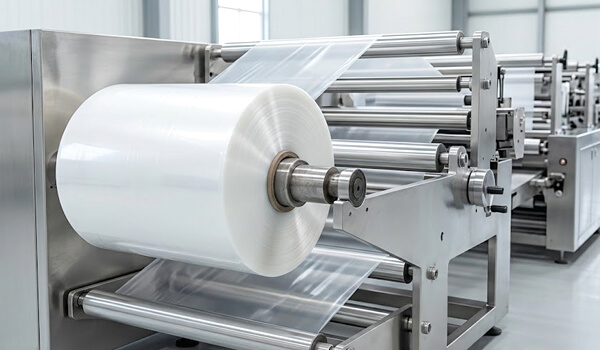
Material versatility is a vital core engineering feature of an advanced wicketer bag production machinery, enabling industrial converters to adapt seamlessly to dynamic flexible packaging demands. Master parameters such as material thickness, film thickness capacity, and material thickness compatibility ensure smooth production from 8 to 250 microns. High-performance substrates, applicable films, standard poly films, specialty eco films, and processable materials run efficiently without web shaking via an advanced feeding mechanism. Supported materials cover LDPE, HDPE, PP, CPP, OPP, PET, Nylon, PLA, recycled extracts, and biodegradable green films for maximum production output.
Drive & Control Systems
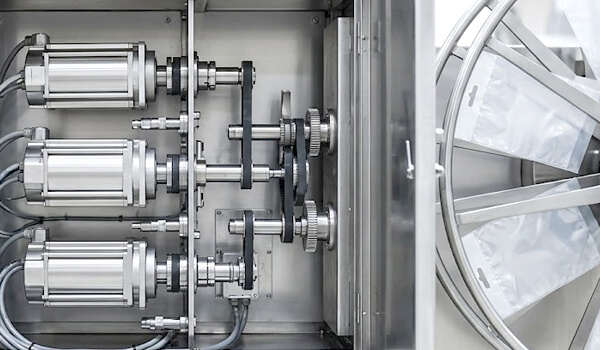
Drive & control systems are the heart of an advanced wicketed bag manufactruing machinery, maintaining absolute tension and synchronized alignment for downstream automated packaging. A modern drive architecture integrates an advanced servo system with 2 to 11 driving motors to perfectly sync feeding, sealing, and collection arms. Managed by a centralized control platform and automation control using an industrial PLC control interface with a digital HMI touchscreen, these drive & control system elements deliver high-precision tuning and an exceptional automation index. This ensures tight dimensional tolerances while reducing overall operational costs through intelligent predictive scalable optimization.
Bag Dimensions
Bag dimensions are core technical specifications of an wicketer bag production machinery, directly determining packaging capacity, volumetric utility, and production versatility for automated filling systems. Core bag dimensions incorporate customizable metrics including bag width (draw length), bag width capabilities, bag length (sealing width), bag length (draw length), and bag height (cutting length) or bag height/length spanning 75 mm to 1220 mm. High-performance units also feature precise bottom gusset depth tuning up to 70 mm, max unwinder roll width to 1200 mm, max unwinder roll diameter around 800 mm, and film thickness, film thickness range, or thickness capability from 0.007 mm to 0.08 mm under engineering.
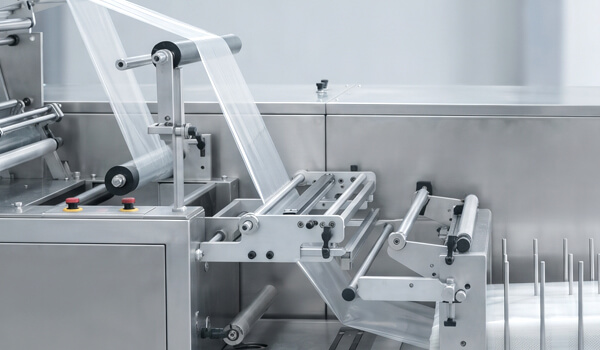
Wicket Stacking & Collection
Wicket stacking & collection is the prime core mechanism of our state-of-the-art advanced wicketed bag manufactruing machinery, dictating superior high-speed stacking accuracy and robust automated indexing reliability. Incorporating an innovative collection mechanism and flexible arm configuration, 4 to 8 rotary collection arms or wicket collection arms catch cut films safely and seamlessly. This windmill-style wicket stacking unit and comprehensive collection & stacking system provides a reliable stacking system for bag collection. Meanwhile, wicket stacking & counting regulates precision stack sizes before transferring finished pouches onto your index conveyor under intelligent automation protocols for prime operational efficiency.
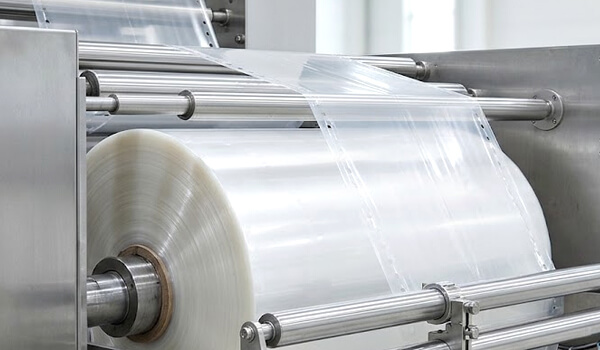
Unwind & Web Management
Unwind & web management is the essential core mechanism of an advanced industrial high-performance wicketer bag production machinery, dictating smooth film feeding and exact print registration. Powered by a heavy-duty unwinder station, unwind stand, or unwinder unit, it expertly supports max unwind plus roll width capacities with intelligent control. Unwinding & tension control and tension control maintain ultimate web stability, while edge position control (EPC), web alignment, and web guiding optimize seamless film feeding during complex pre-processing. Finally, advanced photocell tracking, print registration, and precise registration control guarantee superior cut accuracy for high-speed automated packaging operations.
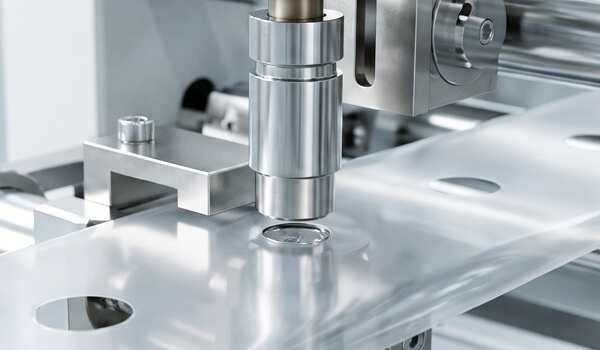
Perforation & Punching
Perforation & punching is the essential key tooling process of an advanced industrial wicketed bag manufactruing machinery, enabling precise pinhole creation, air venting, and custom package functionality. Strategic integrations of a high-performance perforation unit, pneumatic punching units, or a unified perforation & punching unit ensure clean hole geometry at high operational speeds. High-precision specialty punches, advanced pneumatic perforation & punching systems, and reliable punching & perforation tools execute exact cutting. Standard punches, round-bottom punches, and square-bottom punches handle specialized product shapes smoothly for superior industrial manufacturing excellence and reliability.
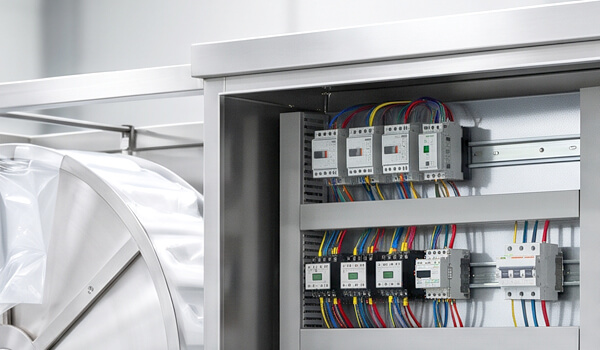
Power Supply & Requirements
Power supply & requirements is the critical electrical foundation of an advanced industrial wicketer bag production machinery, guaranteeing stable power distribution, intelligent heating bar stability, and multi-axis servo motor efficiency. Standard industrial power supply configurations run on secure 3-phase 220V, 380V, or 415V setups at 50/60 Hz. Total system power requirements range from 9 kW for standalone converting machines up to 70 kW for heavy-duty automated lines equipped with auxiliary attachments. Meanwhile, operational power consumption and total power consumption average between 15 kW and 62 kW depending on connected electrical load and optimized sustainable manufacturing execution modes.
Modular Add-ons Attachments
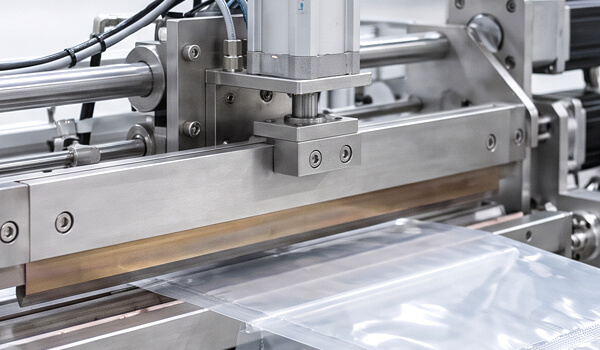
Modular add-ons attachments are essential technical enhancements of a wicketed bag manufacturing machinery, enabling customization for diverse pouch formats. Incorporating modular add-ons, in-line attachments, optional attachments, common optional attachments, and specialized add-ons expands line versatility. A PP sealing knife, sealing mechanism, sealing system, sealing & cutting, sealing elements, side sealing and cutting, and sealing & gusseting work alongside bottom gusset attachments and bottom gusset devices under a multi-axis servo drive. Safety features, automatic fault protection, static eliminators, auxiliary equipment, zipper applicators, and closure systems ensure operational precision.
How wicket bag making machine work? What are the workflows of this kind of machine?
Wicket bag making machine workflow is an advanced industrial system that automates the conversion of continuous plastic film rolls. A wicketed bag production machine converts plastic roll stock, flat or tubular plastic film, raw plastic rolls, and pre-extruded or printed plastic film. Working seamlessly, wicketer machines convert and a wicketed bag production machine workflow transforms continuous rolls of plastic film, rolls of plastic film, plastic film rolls, and plastic rolls such as PE, PP, LDPE, HDPE, CPP, BOPP, PLA, or OPP. These materials are precisely processed into neat, stacked, perforated, pre-opened, pre-punched, and hole-punched poly bags. Depending on the technical setup, they are mounted on metal wire wickets, held together on metal wires, wickets, a wire wicket, or metal wicket wires. They can also be held together by a metal wicket wire or held together by a wire wicket, effectively producing stacked metal-wicketed, wire-wicketed, and metal-wicket-held bags. Modern automated workflows follow a continuous, single-pass or servo-intermittent process by leveraging kinematic synchronization, web tension management, and transverse thermal sealing for flawless execution. These bags are widely used for high-speed automated packaging in industries like bakery, poultry, and hygiene. Designed for fast manual or automated filling, high-speed automated filling lines, and automated high-speed packaging lines, they are utilized in high-speed packaging lines, automated packaging lines, and for high-speed automated or manual packaging. Finally, these converting solutions are commonly used for bread, poultry, diapers, and produce. They adapt seamlessly to applications such as bread, poultry, produce, or diaper packaging, like bread, poultry, or produce packaging, like bread or diaper packing, and are perfectly engineered for lines like bread, bakery, and produce lines. Based on our over 40 years of experience with this type of machinery, we recommend that you follow these six steps to understand how this type of machinery works and what the most important workflows are:
- Film Unwinding & Tension Control
- Folding & Gusseting (Optional)
- Heat Sealing & Welding & Cutting
- Punching & Perforation
- Wicketing & Stacking
- Collection & Packaging
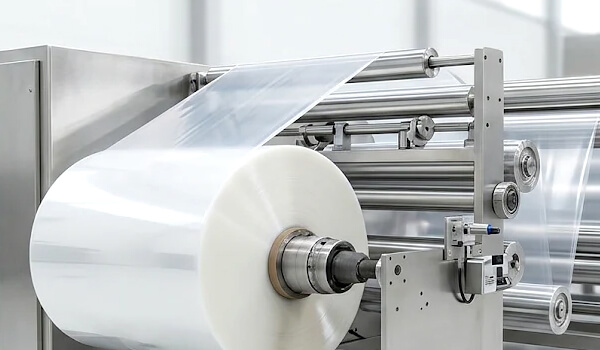
Film Unwinding & Tension Control
Film unwinding & tension control is the foundational web-handling process for high-speed wicketed pouch converting machinery, ensuring absolute substrate stability. During this continuous process, the film feed initiates at a shaftless servo-driven unwinder station. To optimize tension control & alignment, the system utilizes load cells and smart dancing rollers. This active tension control eliminates web wrinkling, while precise tension & alignment synchronizes throughput. Finally, the Edge Position Control (EPC) mechanism leverages photoelectric sensors to prevent lateral drift flawlessly.
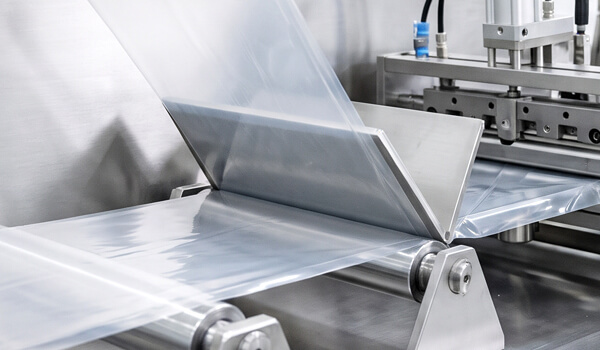
Folding & Gusseting (Optional)
Folding & gusseting is the critical geometric shaping phase in wicketed converting machinery, essential for expanding volumetric capacity for bulky packaging. This precise process initiates web folding through V-boards to establish the pouch profile. For exact gusset formation, the pneumatic mechanism creases the film flawlessly. Through advanced V-folding & gusseting, custom bottom/side gussets are formed before the thermal sealing stage. Optional inline units can also integrate zipper bonding and handle reinforcement, maximizing versatile flexible packaging operations.
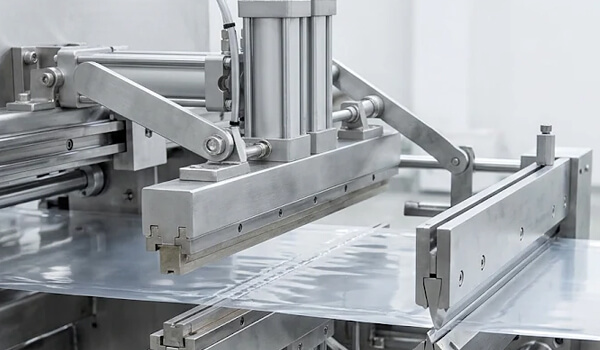
Heat Sealing & Welding & Cutting
Heat sealing & welding & cutting is the primary thermal conversion phase in advanced wicketed pouch production machinery, dictating absolute structural seam integrity. During this automated process, the microprocessor-controlled kinematic mechanism executes high-precision heat fusion. For edge / side sealing and side or bottom sealing, heated seal bars weld continuous film layers. Through precision cutting and transverse cutting & perforation, high-speed thermal knives separate discrete bags. Operating at optimum speed, modern wicketers reach 220 to 350 cycles per minute.
Punching & Perforation
Punching & perforation is the critical high-precision tooling phase in advanced wicketed pouch converting machinery, dictating flawless dispensing and pouch breathability. During this automated process, intelligent laser-calibrated units execute exact die-cutting. For hole punching and inline perforation & punching, high-speed pneumatic dies pierce the lip. The wicketed punching stage creates ultra-precise wicketed holes, while the kinematic mechanism applies vent/air holes or U-shaped punches for custom shapes. Finally, a micro-perforation tooth blade executes tear-off perforation seamlessly.
Wicketing & Stacking
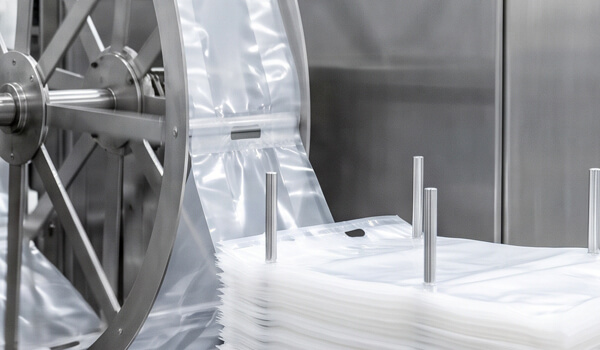
Wicketing & stacking is the vital automated collection phase in advanced wicketed pouch production machinery, dictating high-speed batching precision and seamless downstream packaging integration. During this continuous process, a rotary arms / windmill assembly with vacuum assistance gathers finished pouches. For high-precision pin insertion and wicketed pin loading, mechanical arms align bags onto needles in exact batch counts. Finally, completing wicketed insertion & output, integrated clamp systems execute bundle capping & removal for automated outfeed conveyors.
Collection & Packaging
Collection & packaging is the final automated discharge phase in advanced wicketed pouch converting machinery, essential for securing quality assurance and downstream packing integration. During Rotary Arm Collection, multi-axis servo systems with vacuum arms gather cut bags onto pins. The mechanism employs digital HMI touchscreens to index target batch counts precisely. In this continuous process, inline visual inspection systems verify seal integrity and dimensional accuracy. Finally, an auto-stacker conveyor moves completed wicketed bundles to outfeed units for master carton packaging.